How is saffron harvested? Why is it called “red gold”?
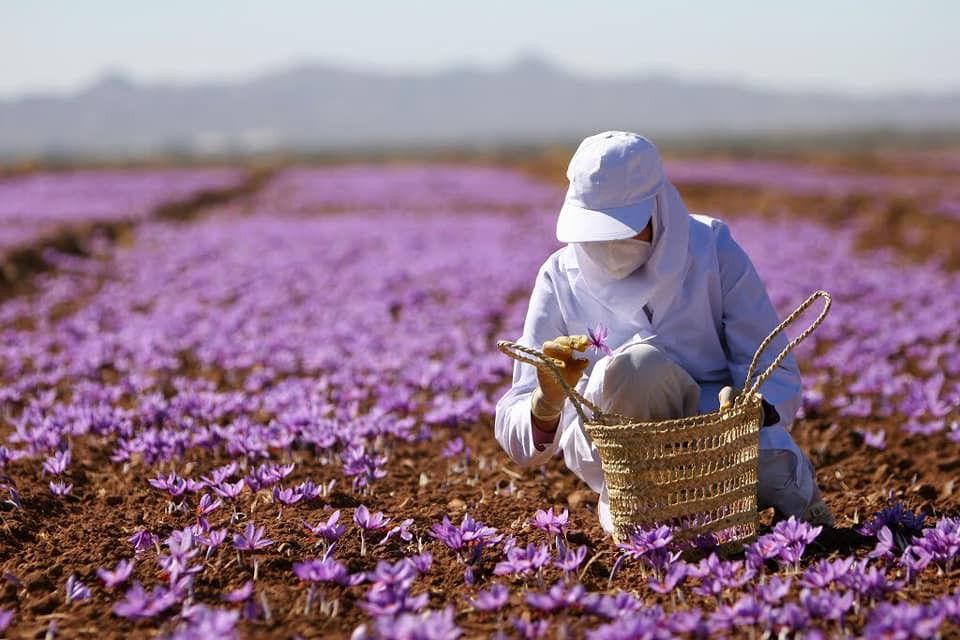
Discover the saffron harvesting process from flower to finished product and learn why it takes tens of thousands of flowers to produce just one kilogram of saffron.
How is saffron harvested?
Many people wonder:
Why is saffron so valuable?
What makes it one of the world's most expensive spices?
How does a single saffron strand reach your cup?
The answer lies in the remarkable harvesting process behind every strand of saffron.
From blooming flowers to packaged products, nearly every step is performed by hand.
This labor-intensive process is one of the reasons saffron is known as “red gold.”
Which part of the flower becomes saffron?
Saffron comes from the red stigmas of the Crocus sativus flower.
Each flower produces:
Only three red stigmas
Strands approximately 2–4 cm long
A very small dry yield
As a result, large numbers of flowers are required to produce even a small amount of saffron.
How long does the saffron harvest season last?
Unlike many crops, saffron flowers bloom only once a year.
Typically:
Flowering occurs between October and November
The season lasts about 2–4 weeks
Each flower blooms for a very short period
This limited window makes harvesting highly time-sensitive.
Step 1: Harvesting flowers before sunrise
One of the most unique aspects of saffron farming is the harvest timing.
Farmers often begin collecting flowers as early as 4–5 a.m.
This helps:
Protect the stigmas
Reduce sun exposure
Preserve freshness
Maintain quality
Once the flowers fully open, harvesting becomes more difficult.
Step 2: Hand-separating the stigmas
After harvesting, flowers are transported for processing.
Workers carefully open each flower and remove the three red stigmas by hand.
This is the most labor-intensive stage because:
Each flower contains only three usable strands
The stigmas are delicate
They can easily break during handling
Experienced workers may process thousands of flowers per day.
Step 3: Drying and grading
After separation, saffron strands are dried.
This stage directly affects:
Color
Aroma
Final quality
Shelf life
Different producers use:
Low-temperature drying
Controlled hot-air systems
Traditional drying techniques
During drying, saffron loses weight while concentrating its aroma and color.
How many flowers are needed to produce 1 kilogram of saffron?
This is one of the most surprising facts about saffron.
Industry estimates suggest:
Approximately 150 flowers are needed for 1 gram of dried saffron
Around 75,000–170,000 flowers are required for 1 kilogram
These numbers help explain why saffron remains one of the world's most valuable spices.
Why does harvesting affect saffron quality?
Not all saffron is equal.
Final quality depends on:
Harvest timing
Stigma separation techniques
Drying methods
Storage conditions
This is why saffron is categorized into grades such as:
Super Negin
Negin
Sargol
Pushal
Super Negin is often considered the premium grade because of:
Long strands
Consistent deep-red color
Minimal breakage
Superior appearance
Why does Iran lead the global saffron industry?
Today, Iran produces approximately 85–90% of the world's saffron.
Major saffron-growing regions include:
Khorasan Razavi
Qaen
Mashhad
Torbat Heydarieh
The combination of:
Favorable climate
Centuries of expertise
Large-scale cultivation
has made Iran the global leader in saffron production.
Is saffron a medicine?
No.
Saffron is a natural spice and herbal product often used as part of a wellness-oriented lifestyle.
However:
Saffron is not a medicine
It should not replace medical treatment
Individual experiences may vary
Conclusion
Every saffron strand represents hours of careful work, from cultivation and harvesting to separation and drying.
Its rarity, craftsmanship, and labor-intensive production are what make saffron one of the most valuable spices in the world.
Understanding the harvesting process helps explain both the value and quality differences found in saffron products.
“If you are exploring saffron for the first time, learning about its cultivation and harvesting process is one of the best ways to appreciate its true value and make more informed purchasing decisions.”
Related articles
- When is the best time to drink saffron? A practical guide for daily use
Should you drink saffron in the morning or at night? Learn the best times to use saffron threads and saffron-infused honey as part of a balanced wellness routine.
- Saffron and a modern healthy lifestyle: Why saffron alone is not enough
Discover how saffron fits into a healthy lifestyle. Learn why long-term wellness depends on daily habits, sleep, nutrition, stress management, and consistency.
- How many saffron threads should you consume per day? A beginner's guide
Wondering how many saffron threads you should use daily? Learn recommended amounts for beginners, proper usage methods, and why quality matters more than quantity.